
LED neon lights have become the top choice for home decor, business signage and creative lighting projects. They deliver the classic neon look with better safety, efficiency and flexibility. This guide will help you select the right LED neon lights with clear and practical steps.
What Are LED Neon Lights
LED neon lights use LED chips enclosed in flexible silicone to replicate the visual effect of traditional glass neon. Unlike old neon tubes, they run on low voltage, produce little heat and are shatter‑resistant. They save up to 80% energy and last 30,000–50,000 hours, far longer than traditional alternatives.

Key Factors to Choose LED Neon Lights
1.Indoor or Outdoor Use
- Indoor: Flexible silicone is suitable for homes, stores and events.
- Outdoor: Choose IP65 or higher silicone tubing for waterproof, dustproof and UV‑resistant performance.
2.Tubing Material
- Silicone: Soft, durable and weatherproof; ideal for long‑term outdoor use.
- PVC: Cost-effective and lightweight; good for indoor or short‑term projects.
3.Color & Control
- Single color: Stable glow, simple power supply, lower cost.
- RGB: Remote or APP control for color changes and dynamic effects.
- RGBW: Extra pure white light for more natural tones.
4.Brightness & Light Quality
- Check LED density: 120 LEDs/m for standard use, 240 LEDs/m for high‑brightness signs. Choose CRI ≥80 for true color rendering.
5.Size & Flexibility
- Measure your space and select the proper length. Most LED neon lights are bendable for logos, letters and curved designs.
How to Choose for Different Scenarios
- Home decor: Warm white or soft single colors, indoor silicone tubing .
- Business signs: Uniform brightness, IP65 silicone for outdoor signs.
- Events & parties: RGB models with dynamic effects, easy to install and move.
Common Mistakes to Avoid
- Choosing by price only: Cheap products may flicker, fade or pose safety risks.
- Ignoring IP rating: Outdoor lights require high waterproof performance.
- Mismatched power supply: Use a driver rated for 1.5 times the total load.
How to Choose Between Front‑Emitting and Side‑Emitting LED Neon Strips
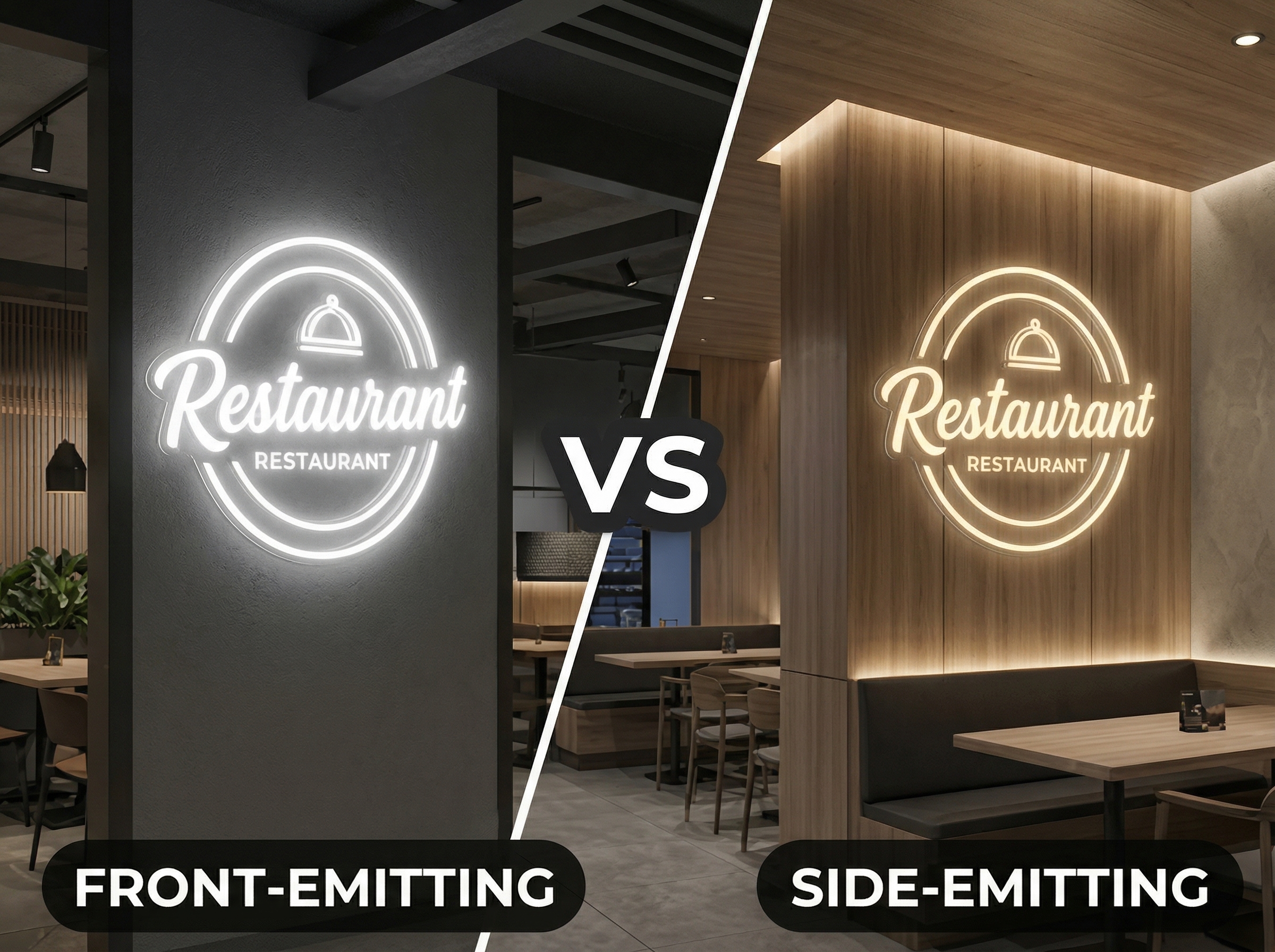
- First, understand the light direction. Front‑emitting neon strips shine light directly forward, creating a bright, concentrated glow ideal for signs and logos. Side‑emitting neon strips release light along the strip, producing a soft, even linear effect perfect for contour lighting and decoration.
- Second, consider your design purpose. Choose front‑emitting strips if you need high visibility for business signs, wall art, or text displays. Choose side‑emitting strips if you want subtle ambient lighting, edge decoration, or concealed linear lighting.
- Third, check appearance and installation. Front‑emitting strips show a clear, full light surface when viewed head‑on. Side‑emitting strips offer a smoother, more integrated look when installed along edges or gaps. Both are flexible and safe, but their lighting effects serve completely different design needs.
Why Choose Our LED Neon Lights
At first, we specialize in the R&D and manufacturing of high‑quality LED neon lights. We use food‑grade silicone tubing and original high‑brightness LEDs, with CE, RoHS and other authoritative certifications. Our products are waterproof, durable, flicker‑free and stable in light decay.
Next, we support one‑stop customization including size, color, logo and text, with free design and installation guidance. We can fully meet your personalized needs for home, commercial and event lighting.
Finally, all products pass full inspection before delivery, backed by a 5‑year warranty and fast after‑sales support. We provide reliable cost‑effective neon lighting solutions and product services for customers worldwide.
If you have any further questions,welcome to contact rena@ianled.com for the best suitable lighting solution you need.